That is the sunset, the red in the ring? 
5 Likes
Just a suggestion, not a criticism.
I’m going to assume they’re not using rocket type engines in the future. However, if they are I’d like to see a more spread out exhaust plume at the end of the missile to simulate the expanding gases entering a vacuum 
I love watching SpaceX launches when the craft reaches high altitude / orbit and the engine plume becomes much wider. It looks very dramatic 
2 Likes
Those missiles are just place holders for prototyping, ignore the art.
Of course, it’s just a suggestion for when you get to the visuals 
1 Like
I don’t think that’s the sun, it may be a combination of baked IBL maps and light coming off the rings / galactic plane placeholder visuals. I’m pretty sure I was well on the dark side…
(edit: It’s possible the star was closer than expected… those sneaky stars… always where you least expect them…)

3 Likes
Also, it would be nice to see the plume particles have corresponding Newtonian movement. The first ones would be sent back at the ship (unless the initial velocity is high enough, but I’d expect those missiles to have a HIGH exhaust velocity, and it would probably look better), then, relative to the ship, going slower and slower. An interesting effect is that if the missile is manoeuvring, it would have a “spray hose” effect where the plume is widening before dissipating.
To avoid it look bad (real warship don’t look that good when sprayed with their own missiles’ exhaust), the missile’s engine could start only after some distance.
With the right tweaks, a realistic look would work beautifully - and a realistic look is so rare it would stand out among the many space shooter/sim we are seeing
Hah, you wish we are!
Seriously, the second one is particularly nice.
I suppose the transition between rocks and ring isn’t quite finished yet in the first one, but this shot shows how difficult it is: not only you need many point-like rocks to finish the transition, but the visible rocks are black while the ring is clear (probably because the ring is also composed of microscopic particles and gas, I suppose).
But I have confidence in the final result!
1 Like
I really like the look of the asteroid field! One must wonder though… how do you navigate such a place with almost no light to lighten up the asteroids?
I doubt they’d be around long enough to be seen. I’d expect a very wide and ephemeral plume that leaves no trail because of the exhaust velocity and the fact that it’s being fired in a vacuum.

So the launching ship would see something that looks more like photon torpedoes or plasma rounds than the standard game trope of missiles with smoke trails (which is air-to-air missiles in space - to be avoided like airplanes in space). The targeted ship would see the wide exhaust plume with a black dot in the middle, but that’s about it. If a salvo of missiles was fired, then the various light sources for each engine might illuminate the other missiles in interesting ways.
Then maneuvering would be handled by rockets that fire laterally. If the missiles are spin-stabilized, then that might produce a rather mean-looking visual for the targeted ship.
I also wouldn’t expect to see missiles following lazy serpentine trails. Maneuvering in air is as simple as changing your angle of attack. Maneuvering in a vacuum requires active thrust.
If you want dramatic looks, consider how missiles might work in such an environment, then come up with variations on that. For example, what would happen if missiles popped out top and bottom of a ship, lazily slid away from the ship while turning towards the target, then fired their main engines? Or they popped out already oriented towards the target ship and delayed firing for a moment or two? The delay works as a dramatic pause before the light show of firing the engines. Also, there would be no need to deal with the visual of the exhaust interacting with the firing ship.
The artists should be trying to create a crisp, hard-edged visual, not one that is soft, warm and tangible. The particle effect test suggested a butane lighter to me, and the missiles suggest CO2 fire extinguishers. Low gravity and a vacuum constitute a very harsh environment, and I would be greatly disappointed if it was made to seem friendly and accessible. Space is not nice.
6 Likes
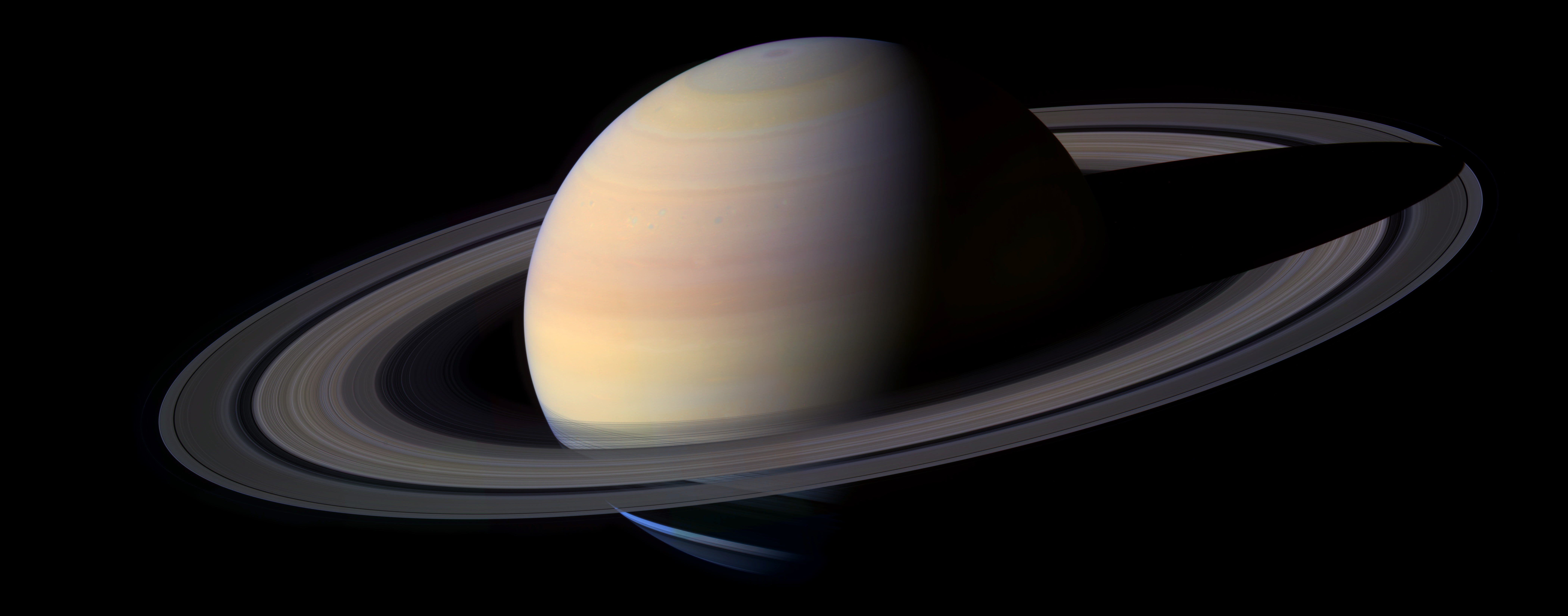
one thing i noticed was how hard the shadows the rings make on the planet are. They should probably be less sharp assuming a decent sized sun if your going for realism.
1 Like
no, there a already fuzzy enough. look at a real image: http://i.space.com/images/i/000/044/349/i02/saturn-rings-translucent.jpg?1418676872

the shadows are thousands of kilometers large…
If we’re going for realism I’d like to see more than one reference case, Saturn, with the ring shadows being cast on the top cloud layer etc. Just waiting on NASA…
2 Likes
those are also at a higher angle and are still blurrier than the ones in the image.
in which image?
btw. take a look at an image that was postet earlier in this thread: https://inovaestudios.blob.core.windows.net/forumsavatars/2778464f2b5c9c07a3b088960c1c6e219fdb298af7fd.jpg
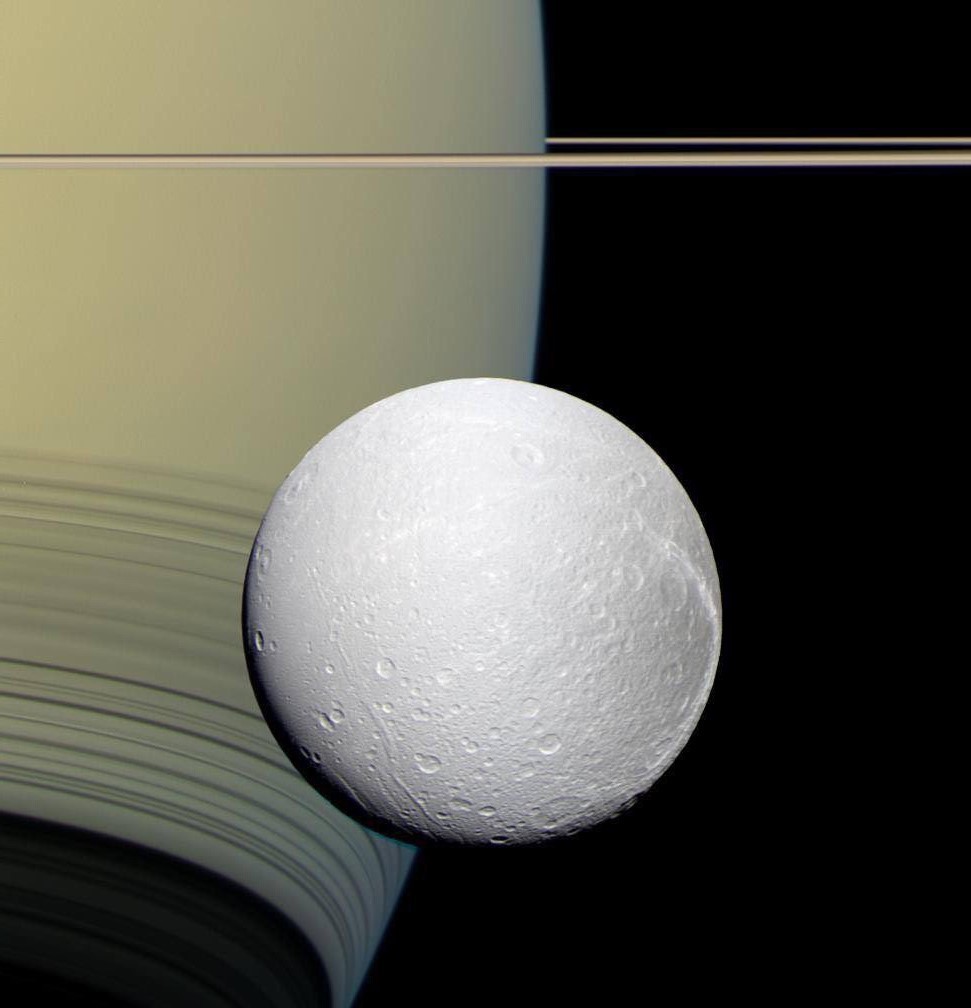
The shadows are pretty sharp…
they cant be too blurry because in space there is no atmospheric scattering, shadows are super sharp.
Yes. Now we only need micro-missles swarms a-la Macross and my fetish is satisfied.
Eh, what? The sun isn’t a point light source. It is an area light and therefore shadows get fuzzy edges the further the shadow is cast. Atmospheric scattering has little to do with it at those scales (although some effect is surely there).
Correct me if I’m wrong, but I believe the reason that the shadows are more sharp than we would think (in both the engine and in the real photos) is that the distance between the rings and the planet is miniscule compared to the distance between the planet and the light source.
In addition, we are viewing that shadow from a very large distance; this makes the fuzzy part very small compared to the rest of the shadow. If we were closer (say, in the planet’s atmosphere looking down at the shadow) we would be able to see the shadow fade from dark to light to non-existent much more easily.
Again, just speculation, but in my mind this makes sense.
EDIT: spelling
1 Like
https://www.nde-ed.org/GeneralResources/Formula/RTFormula/Unsharpness/GeometricUnsharpness.htm

Penumbra (Ug) is f*b/a wide
Assume
Sol - diameter 1.4M km (f)
Saturn - 9AU away (a)
Ring at 40,000 km (b)
Penumbra is 41km wide
Assume
Sol - diameter 1.4M km
Earth - 1AU away
Basketball at 1 meter
Penumbra is 9mm wide
Assume
Kepler 423 - diameter 1.4M km
Kepler 423-B - 0.03585AU away
Ring at 40,000 km
Penumbra is 10,000 km wide
The basketball 1 meter above the surface of 423-B would have a penumbra of 26cm (10 inches).
4 Likes